A practical environmental education programme helping students and teachers turn climate knowledge into gardens, recycling systems, compost, circular-economy skills and community action.
EcoSchoolsNG is FABE International Foundation’s school-based environmental education programme. It supports schools—particularly government, rural and low-cost schools—to make sustainability part of school life through structured learning and hands-on projects.
Students do more than discuss environmental challenges. They learn to investigate problems, design responses, work together and demonstrate solutions within their schools and surrounding communities.
130,000+
students reportedly reached through EcoSchoolsNG since 2016
174
government schools included in FABE’s reported programme reach
2016
the year from which FABE reports sustained school-based action
Learning model
Learn it. Make it. Grow it. Lead it.
EcoSchoolsNG combines climate literacy with practical green skills and student-led action.
01
Learn
Understand climate change, waste, pollution, food systems and the circular economy in locally relevant ways.
02
Make
Build skills through recycling, upcycling, composting, biogas demonstrations and creative reuse.
03
Grow
Create and maintain eco-gardens that connect environmental learning with food, soil and biodiversity.
04
Lead
Equip eco-ambassadors to organise peers, communicate progress and extend action into their communities.
Learning by doing
The school becomes a living laboratory.
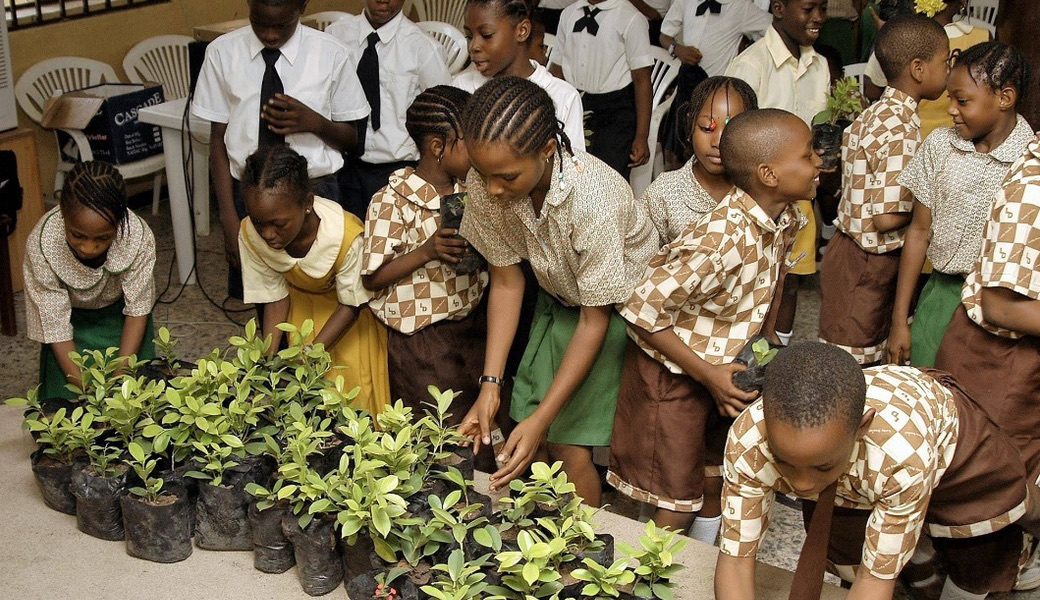
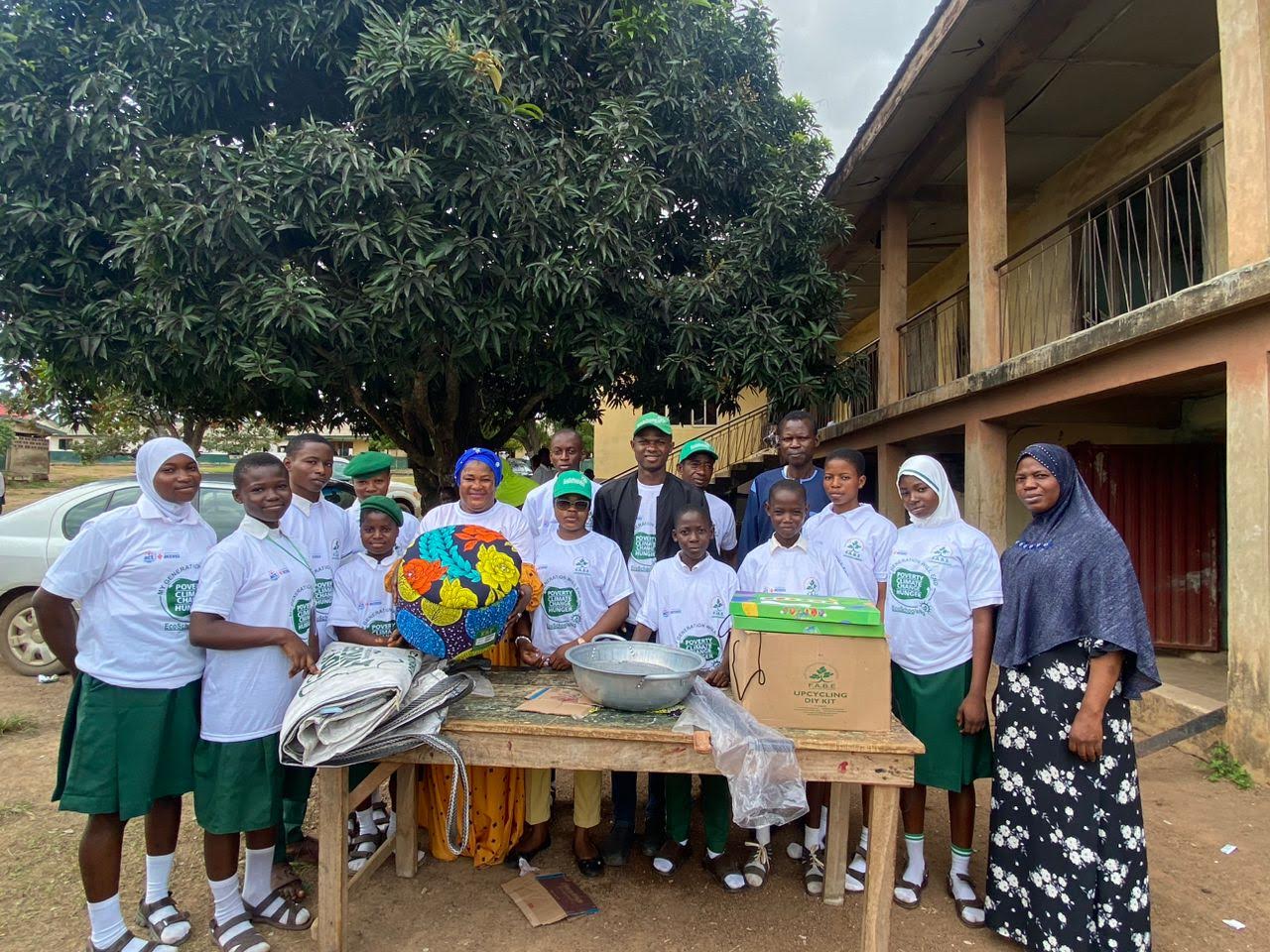
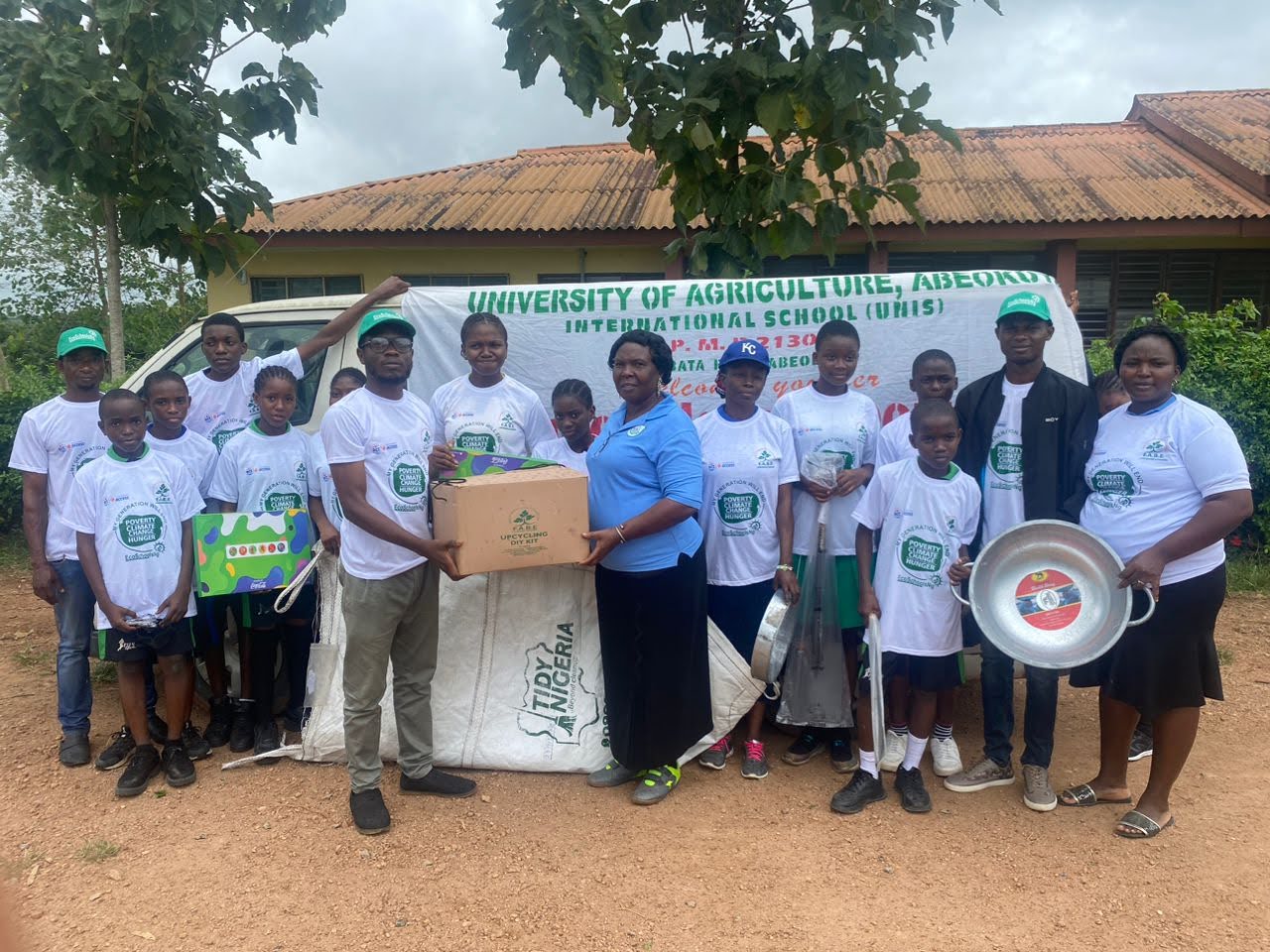
EcoSchoolsNG connects classroom learning to real projects. Students sort materials, grow food, improve soil, reuse waste and test ideas that make their school environment healthier and more resource-efficient.
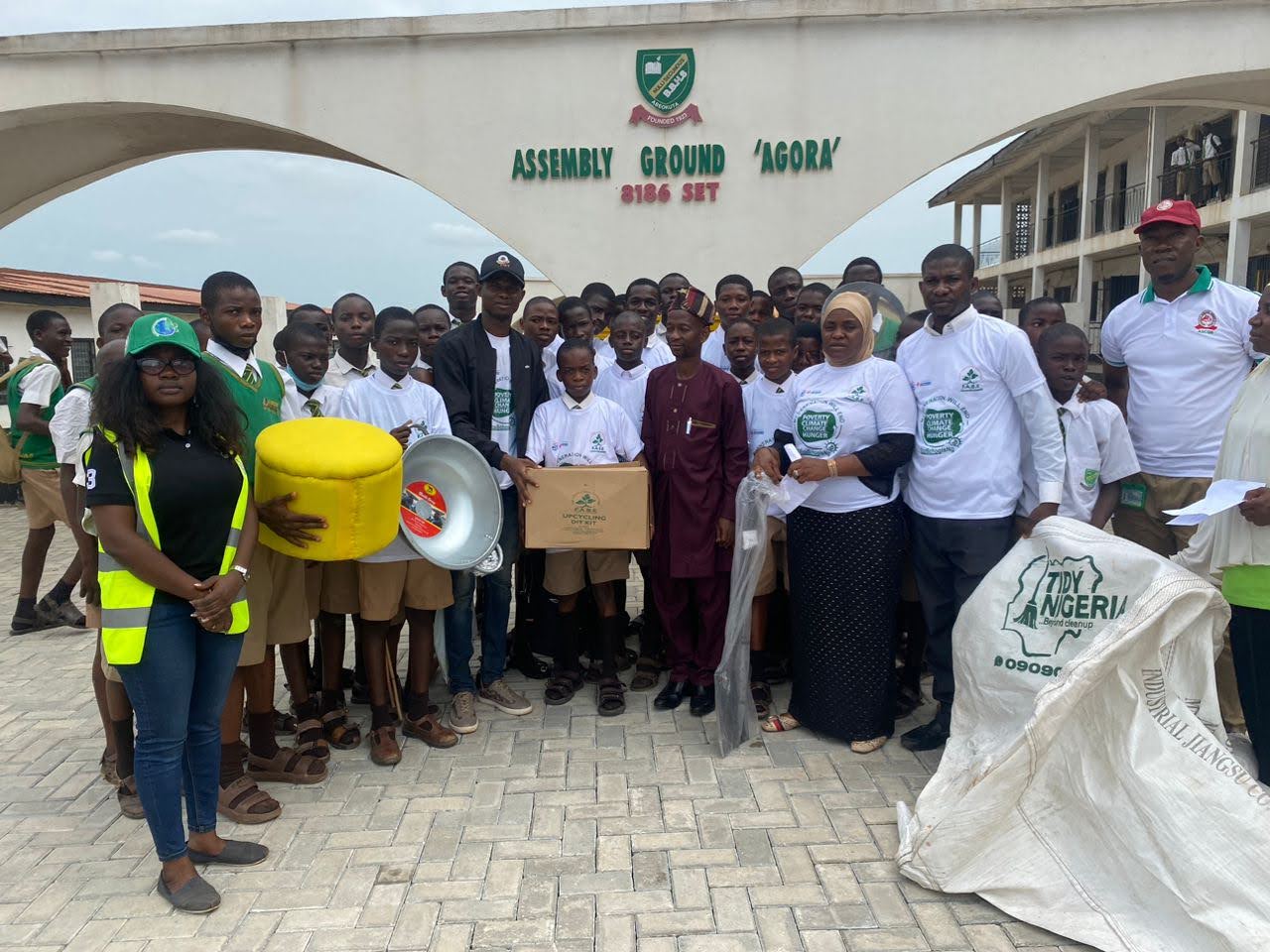
Teachers and school leaders help embed the work within school routines, while families, volunteers and partners strengthen the connection to the wider community.
What students practise
Green skills for school, community and future work.
01
Sustainable gardening
Soil preparation, planting, care and the practical relationship between food, biodiversity and climate resilience.
02
Waste separation
Identifying materials, reducing mixed waste and organising school recycling practices.
03
Upcycling & reuse
Applying creativity and design thinking to turn discarded materials into useful products.
04
Composting
Converting organic waste into useful soil inputs while understanding natural cycles.
05
Circular enterprise
Connecting resource recovery and green skills with responsible production and livelihood possibilities.
06
Climate leadership
Building teamwork, systems thinking, communication and responsibility through student-led action.
Reported programme reach
A growing movement of young environmental problem-solvers.
The figures shown here were reported by FABE at the March 2026 EcoSchoolsNG Youth Climate & Circular Economy Summit and covered by the News Agency of Nigeria.
students trained in sustainability, circular economy and gardening skills
174
government schools reached since 2016
112
schools reached with ACT Foundation support since 2020, as reported in 2026
Programme pathway
A structured journey from awareness to agency.
The programme is adapted to each participating school while maintaining a clear progression from understanding local challenges to implementing and communicating practical solutions.
01
Engage
Bring together students, teachers and school leaders around a shared sustainability purpose.
02
Explore
Identify priority environmental challenges within the school and its community.
03
Learn
Build climate literacy, systems thinking and practical circular-economy knowledge.
04
Act
Implement gardens, waste systems, composting, upcycling and other school projects.
05
Share
Measure progress, showcase learning and inspire wider community participation.
For schools and partners
Help more schools turn environmental learning into action.
Schools can enquire about participation. Corporate, philanthropic and public-sector partners can support programme delivery, learning materials, school projects, monitoring and expansion.